
 English
 中文简体
中文简体 Home / News / Industry News / Injection Molding Shrinkage: Calculation, ABS/PP/Nylon Rates & Mold Design Guide
Content
Injection molding shrinkage is the single most consequential variable in achieving dimensional accuracy in molded plastic parts. Every thermoplastic material shrinks as it transitions from the molten state in the cavity to a solid part at room temperature — the question is not whether shrinkage will occur, but by how much, in which direction, and how predictably it can be compensated for in the mold design. Understanding and controlling shrinkage is fundamental to first-time tooling success, tight-tolerance part production, and the elimination of costly mold corrections after steel is cut.
This guide covers the physics of shrinkage, calculation methods, material-specific rates for common resins, the critical distinction between linear and volumetric shrinkage, the role of cooling, mold design compensation strategies, and the downstream effect on dimensional accuracy.
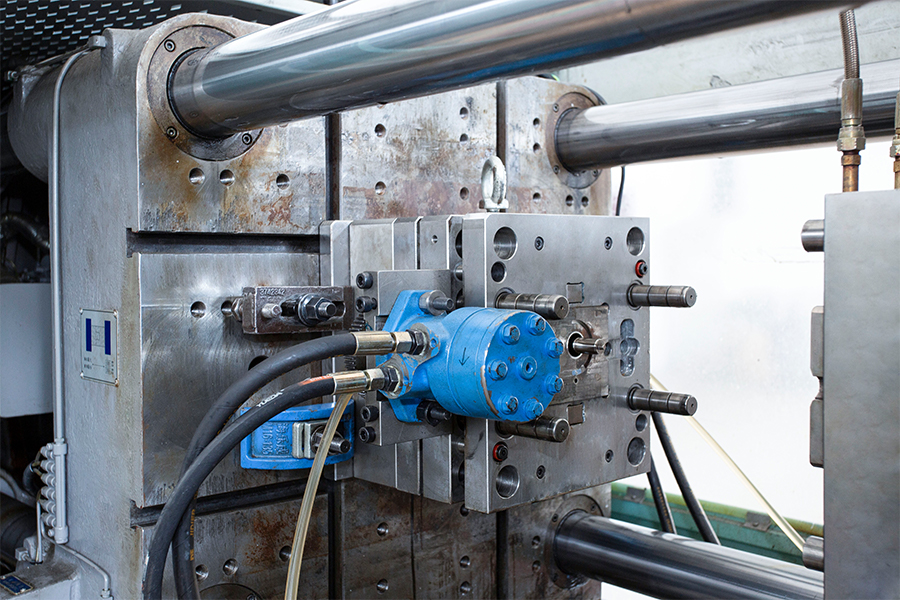
Injection molding shrinkage is the reduction in dimensions that a molded plastic part undergoes between the moment it leaves the mold and its final stable state at room temperature. It is expressed as a ratio — typically in millimetres per millimetre (mm/mm), or equivalently as a percentage — of the difference between the mold cavity dimension and the corresponding part dimension divided by the mold cavity dimension.
Shrinkage arises from three overlapping physical mechanisms:
The distinction between mold shrinkage (occurring inside the closed mold, from cavity pressure to ejection) and post-mold shrinkage (occurring after ejection, over time) is practically important: post-mold shrinkage can continue for 24–96 hours after ejection for semi-crystalline materials, and must be accounted for in dimensional inspection timing and tolerance definitions.
The standard shrinkage calculation formula used in mold design is:
S = (Lmold − Lpart) / Lmold
Where S is the shrinkage factor (expressed as mm/mm or as a decimal), Lmold is the cavity dimension, and Lpart is the measured part dimension at standard conditions (typically 23°C, 24 hours after ejection per ISO 294-4).
To calculate the required mold cavity dimension from a target part dimension:
Lmold = Lpart / (1 − S)
Worked example: A PP part requires a finished length of 100.00 mm. The material datasheet lists a shrinkage rate of 1.5% (S = 0.015). The cavity dimension should be cut to:
Lmold = 100.00 / (1 − 0.015) = 100.00 / 0.985 = 101.52 mm
In practice, shrinkage is anisotropic — it differs in the flow direction versus the transverse direction, particularly in glass-fibre-reinforced grades and in parts with significant wall thickness variation. A rigorous mold design therefore applies directionally differentiated shrinkage values, typically derived from mold flow simulation software (Moldflow, Moldex3D, or equivalent) rather than from datasheet averages alone.
Key variables that shift the effective shrinkage value from the nominal datasheet figure include:
Shrinkage can be expressed in two fundamentally different ways, and the distinction matters for both measurement practice and mold compensation strategy.
Linear shrinkage (also called mold shrinkage per ASTM D955 or ISO 294-4) measures the dimensional change along a single axis — typically the flow direction or transverse direction of a standardised test bar. It is the figure published on material datasheets and used directly in cavity dimension calculations. Linear shrinkage values for common thermoplastics range from 0.1% (PMMA, PC) to over 3.0% (unfilled HDPE, POM).
Volumetric shrinkage describes the total reduction in volume of the part from the molten to solid state, incorporating shrinkage in all three dimensions simultaneously. It is approximately — but not exactly — three times the linear shrinkage value for isotropic materials. For anisotropic materials (glass-filled, oriented, or heavily gated parts), the relationship is more complex because shrinkage in the flow direction can differ from transverse shrinkage by a factor of 2–4×.
Volumetric shrinkage is the quantity predicted by injection molding simulation software and is used to assess the risk of sink marks and voids — both of which occur when the surface solidifies before sufficient material has been packed into the core to compensate for the volumetric reduction during cooling. A volumetric shrinkage differential greater than 6–8% between the surface skin and the core in a thick section is a reliable predictor of visible sink or internal voids.
ABS (Acrylonitrile Butadiene Styrene) is an amorphous thermoplastic, which means it lacks the crystallisation mechanism that drives high shrinkage in semi-crystalline resins. The ABS shrinkage rate is correspondingly low and predictable, typically in the range of 0.4–0.8% (0.004–0.008 mm/mm) for unfilled grades.
Key characteristics of ABS shrinkage behaviour:
The low, consistent shrinkage of ABS makes it the preferred material for tight-tolerance aesthetic parts — consumer electronics housings, automotive interior trim, and medical device enclosures — where dimensional repeatability across high-volume production is essential.
Polypropylene (PP) is a semi-crystalline polymer, and its shrinkage behaviour reflects the strong influence of crystallisation on dimensional change. The PP shrinkage rate for unfilled homopolymer grades ranges from 1.5–2.5% — roughly three to five times higher than ABS — making it one of the highest-shrinkage commodity resins in common use.
Critical factors in PP shrinkage management:
Nylon (polyamide) presents a uniquely complex shrinkage profile because its dimensional behaviour is influenced not only by crystallisation during molding, but also by moisture absorption after ejection — a phenomenon that partially offsets shrinkage and must be factored into tolerance specifications for nylon components operating in humid or immersed environments.
The nylon shrinkage rate values for the most common grades are:
The moisture absorption effect is significant: dry-as-molded (DAM) PA6 absorbs up to 2.5–3.5% moisture by weight at equilibrium in humid conditions, causing dimensional expansion of 0.5–0.9% that partially recovers mold shrinkage. Engineers designing nylon parts for precision fit must define whether the tolerance applies at DAM condition, at 50% RH equilibrium (ISO standard atmosphere), or at full saturation — and must cut the mold steel accordingly.
Cooling is the phase of the injection molding cycle with the greatest influence on shrinkage magnitude and distribution — and therefore on the dimensional quality and warp behaviour of the finished part. The effect of cooling on shrinkage operates through several mechanisms that the process engineer must manage simultaneously.
In semi-crystalline polymers, cooling rate directly controls the degree of crystallinity achieved: slower cooling → more complete crystallisation → higher shrinkage. A PP part cooled in a mold held at 80°C will shrink measurably more than the same part cooled at 20°C, all else being equal. This relationship is exploited in the design of mold cooling circuits — for applications requiring minimal shrinkage, mold temperature is deliberately kept low; for applications where post-mold stability and uniform crystallinity across thick walls are priorities (e.g., precision gears), a higher, controlled mold temperature is preferred even at the cost of higher nominal shrinkage.
Non-uniform cooling across the part — caused by uneven cooling circuit layout, significant wall thickness variation, or asymmetric mold steel mass — produces differential shrinkage: different regions of the part contract by different amounts, generating internal stress and warpage as the part seeks an equilibrium shape. Differential shrinkage of as little as 0.1–0.2% between the core and cavity sides of a flat part is sufficient to produce visible curvature in a 200mm panel.
Conformal cooling channels — produced by additive-manufactured mold inserts that follow the part contour at uniform distance — are the most effective engineering solution to cooling uniformity, reducing cycle time by 20–40% and warpage by comparable margins versus conventional drilled channels.
Insufficient cooling time — ejecting the part before the core temperature has dropped below the heat deflection temperature (HDT) of the material — allows post-ejection deformation as the still-soft core continues to shrink against an already solidified skin. The result is warpage, sink, or both. A general rule is that the part should be cooled until the hottest point in the wall has reached at least 20°C below the HDT before ejection forces are applied.
Reducing shrinkage — or more precisely, reducing shrinkage variability — requires a coordinated approach across material selection, mold design, and process settings. The following strategies are listed in order of leverage:
Effective mold design for shrinkage compensation begins with the recognition that the cavity must be intentionally oversized relative to the target part dimensions by the expected shrinkage amount — and that this oversizing must be applied directionally, not uniformly, to account for anisotropy.
All cavity dimensions in the flow direction, transverse direction, and through-thickness direction are scaled upward by the appropriate directional shrinkage factor before the mold design is released for machining. For a part with a 50 mm feature in the flow direction of PP homopolymer (Sflow = 2.0%), the cavity dimension is cut at 50 / (1 − 0.020) = 51.02 mm. The transverse dimension for the same feature, where Stransverse = 1.5%, is cut at 50 / (1 − 0.015) = 50.76 mm.
Gate design directly governs packing efficiency and therefore shrinkage. Key principles:
Given the sensitivity of effective shrinkage to process conditions and the uncertainty in predicting exact values for a given geometry, experienced toolmakers apply a steel-safe strategy: cavities are intentionally cut at the low end of the expected shrinkage range (producing an oversized part that needs to be brought to tolerance by removing steel — i.e., opening the cavity). This is far less costly than the reverse scenario where the cavity was cut too large and steel must be added via welding.
Mold flow simulation plays a critical role in shrinkage prediction before steel is cut. Modern simulation tools can predict shrinkage within 0.1–0.2% of actual values for well-characterised materials, reducing the reliance on conservative steel-safe allowances and enabling more aggressive first-cut accuracy targets.
Shrinkage affects dimensional accuracy through three distinct failure modes, each requiring a different corrective approach:
If the shrinkage applied during cavity design differs from the actual shrinkage achieved in production, all part dimensions are shifted systematically in one direction. This is the most straightforward failure mode: parts are consistently over- or undersized across the entire production run. It is corrected by adjusting cavity dimensions (steel removal or addition) after production trials establish the actual effective shrinkage at the validated process window.
Differential shrinkage — arising from wall thickness variation, asymmetric cooling, or highly oriented glass-filled materials — produces warpage: the part deforms out of plane as different regions contract by different amounts. Warpage is not correctable by cavity scaling; it requires a change in cooling circuit design, gate location, part geometry (adding ribs to resist bending), or material selection. In severe cases, the cavity is intentionally pre-warped in the opposite direction of the anticipated distortion — a technique sometimes called "pre-deformation compensation" — so that the warped part springs back to the target flat geometry.
Even with a correctly compensated cavity, shrinkage-driven dimensional variability between shots reduces process capability (Cpk). Sources of shot-to-shot variability include fluctuations in holding pressure, melt temperature, cooling water temperature, and back pressure. High-precision production — particularly for medical devices, optical components, and close-tolerance mechanical assemblies — requires tight process control across all these variables, with holding pressure repeatability of ±0.5% or better being a common specification for precision press selection.
| Material | Type | Shrinkage Rate (unfilled) | Shrinkage Rate (GF30) | Anisotropy Risk |
|---|---|---|---|---|
| ABS | Amorphous | 0.4–0.8% | 0.1–0.3% | Low |
| PC | Amorphous | 0.5–0.7% | 0.1–0.3% | Low |
| PP (homopolymer) | Semi-crystalline | 1.5–2.5% | 0.4–0.8% | Moderate–High |
| PA6 (Nylon 6) | Semi-crystalline | 0.8–1.5% | 0.3–0.5% | High (GF grades) |
| PA6.6 (Nylon 6.6) | Semi-crystalline | 1.0–2.0% | 0.3–0.6% | High (GF grades) |
| POM (Acetal) | Semi-crystalline | 2.0–3.5% | 0.5–1.0% | High (GF grades) |
| HDPE | Semi-crystalline | 2.0–4.0% | N/A (rarely GF) | Moderate |
Shrinkage rates range from approximately 0.1% for rigid amorphous materials such as PMMA, up to 4.0% or more for unfilled semi-crystalline polymers such as HDPE and POM. Most common engineering resins fall in the range of 0.4–2.5%. Material datasheets always publish a nominal shrinkage range; the actual value achieved in production depends on wall thickness, mold temperature, holding pressure, and gate design.
Semi-crystalline polymers undergo an additional volumetric reduction during solidification as molecular chains organise into ordered crystalline regions — a phase transition that involves significant density increase. Amorphous polymers lack this crystallisation mechanism and shrink only due to thermal contraction, producing substantially lower and more predictable shrinkage values.
During the holding phase, additional melt is forced into the cavity under pressure to compensate for the volumetric reduction as the part solidifies. Higher holding pressure packs more material into the same cavity volume, directly reducing the dimensional gap between cavity size and final part size. Holding pressure is the most effective single process parameter for controlling shrinkage magnitude.
Shrinkage is the uniform reduction in size of a part as it cools. Warpage is distortion — out-of-plane bending or twisting — caused by differential shrinkage at different locations within the same part. Shrinkage is corrected by scaling the mold cavity; warpage requires changes to cooling circuit design, gate location, wall thickness uniformity, or material selection, and cannot be corrected by cavity scaling alone.
Industry standard practice per ISO 294-4 is to measure shrinkage 16–24 hours after ejection at 23°C and 50% relative humidity. For semi-crystalline materials with significant post-mold crystallisation (PP, PA, POM), 48–72 hours is more representative of the final stable dimension. Nylon parts that will absorb moisture in service should be measured both at the dry-as-molded (DAM) condition and after moisture conditioning to understand the full dimensional range across the service environment.
Copyright © Suzhou Huanxin Precision Molding Co., Ltd. All Rights Reserved.