Content
Most injection molding defects trace back to one of three root causes: incorrect process parameters (temperature, pressure, or cooling time), a mold design issue (gating, venting, or wall thickness), or material problems (moisture, contamination, or degraded resin). Identifying which of these three buckets a defect falls into is usually the fastest path to a fix, since chasing process tweaks on a mold-design problem, or vice versa, wastes production time without resolving the underlying issue.
The most frequently encountered defects — short shots, sink marks, gate blush, warping, flash, and voids — each have a distinct visual signature and a distinct set of likely causes, which makes systematic troubleshooting far more effective than adjusting machine settings by trial and error.
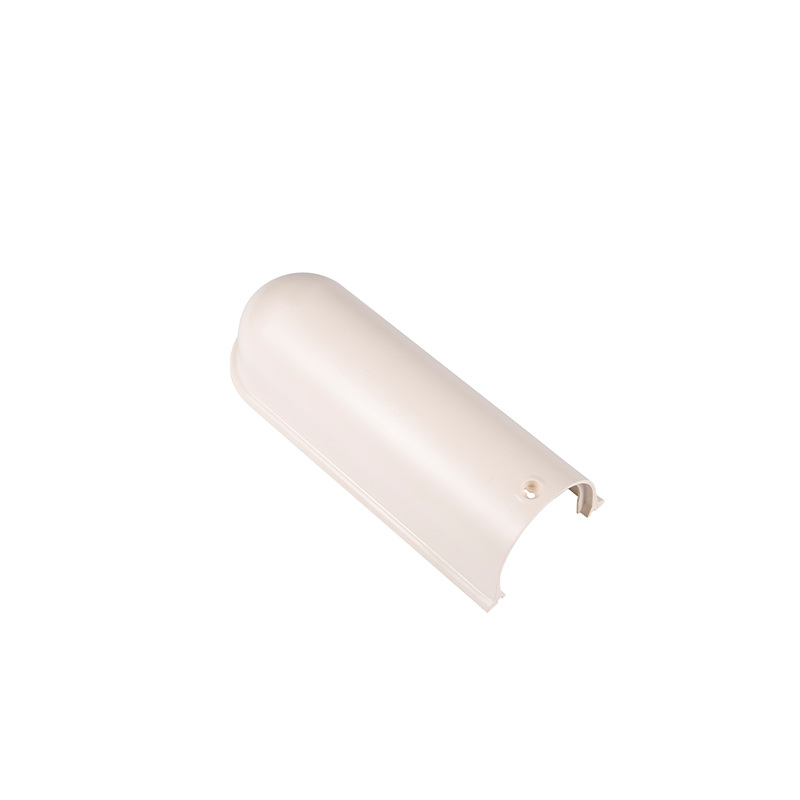
A short shot occurs when molten plastic fails to completely fill the mold cavity before it solidifies, leaving the part incomplete. It's most common in parts with thin walls, long flow paths, or multiple cavities where resin has to travel a long distance while staying hot enough to keep flowing.
Typical causes and fixes include:
Sink marks are shallow depressions on a part's surface that form where thicker sections cool and shrink more slowly than the surrounding thinner wall, pulling the outer surface inward as the material solidifies. They're especially common opposite ribs, bosses, and other thick features on an otherwise thin-walled part.
Correcting sink marks generally starts with holding pack pressure longer and at a higher level, which continues feeding material into the cavity as it cools and compensates for shrinkage. Where that alone isn't enough, reducing the wall thickness of the offending rib or boss — typically to 50–60% of the adjoining nominal wall — addresses the root geometric cause rather than just masking it with process adjustments.
Gate blush is a visible discoloration or streaking radiating out from the gate area, caused by the molten resin shearing at high velocity as it jets through a small gate opening into the cavity. The friction from that shear heats the material locally and can also create a jetting pattern where the melt stream folds back on itself before the cavity fills evenly, both of which show up as a visual blemish near the gate.
Reducing injection speed specifically during the initial fill phase, increasing gate size, or relocating the gate to a less visible or less flow-critical location are the standard fixes. In some designs, switching to a fan or tab gate that spreads the melt stream out as it enters the cavity resolves gate blush that a straightforward pin gate can't avoid.
Air bubbles, or voids, in an injection molded part typically come from one of two sources: air mechanically trapped in the cavity or runner system during fill, or gas released from moisture or volatile additives in the resin itself as it heats. Trapped-air voids usually appear near the last-fill area of the cavity, while moisture-related voids can appear more broadly throughout the part.
Drying the resin to the manufacturer's specified moisture content before molding eliminates most moisture-driven voids, since many engineering resins are hygroscopic and absorb ambient humidity if stored improperly. For trapped-air voids, improving mold venting, slowing injection speed to give air more time to escape ahead of the melt front, and increasing holding pressure to compress any residual voids all reduce the defect.
Quality control in plastic injection molding operates at three points in the production flow: incoming material inspection, in-process monitoring, and finished part verification.
ABS (acrylonitrile butadiene styrene) is one of the most widely molded engineering thermoplastics, valued for its balance of impact resistance, rigidity, and ease of processing. ABS is moderately hygroscopic, so pre-drying — typically 2 to 4 hours at around 80°C (176°F) — is a standard step to prevent moisture-related splay marks and voids.
Typical ABS molding conditions run a melt temperature between roughly 210°C and 260°C (410°F–500°F) and a mold temperature between 50°C and 80°C (122°F–176°F), with the exact figures depending on the specific ABS grade and part geometry. ABS shrinks relatively little compared to semi-crystalline resins, typically around 0.4–0.7%, which makes it a forgiving material for holding tight dimensional tolerances, and its wide processing window is part of why it's a common first choice for consumer product housings, automotive interior trim, and general-purpose enclosures.
Consistent mold maintenance prevents the gradual degradation that eventually shows up as part defects, longer cycle times, or unplanned production stoppages. A structured maintenance program typically covers:
Tracking maintenance against cycle counts rather than calendar time tends to catch wear issues more reliably, since a high-volume mold accumulates wear far faster than a low-volume one even over the same number of months in service.
Copyright © Suzhou Huanxin Precision Molding Co., Ltd. All Rights Reserved.




 English
 中文简体
中文简体