
 English
 中文简体
中文简体 Home / News / Industry News / Plastic Injection Molding for Automotive Parts: A Precision Supplier's Guide
A modern passenger car carries somewhere between 150 and 200 kilograms of plastic, and very little of it is visible. Most of it sits in motor housings, strut bushings, lamp adjusters and maintenance tools that nobody thinks about until something stops working properly. Behind each of those small components there is a mold, a material specification and a dimensional tolerance that has to hold for hundreds of thousands of shots.
We have been making precision plastic parts in Suzhou since 2002, and automotive work has been part of that story for most of it. What follows is our practical view of plastic injection molding for automotive parts: where these parts live, how materials get selected, how molds are designed around them, and what a buyer should check before approving a tool.
Content
The reason injection molding became the default process for automotive components is fairly plain. A well-built mold can run for several hundred thousand cycles, and the difference between the first shot and the hundred-thousandth shot is measured in microns. For structural parts, that consistency matters more than any single headline property. Two parts taken from the same tool, months apart, should assemble the same way.
There is also the weight and integration argument. Every component that moves from metal to engineering plastic shaves grams or kilograms off the vehicle, and in the electric era that saving converts directly into range. Molding also lets ribs, snap fits, mounting bosses and threads be formed in a single cycle, which removes most secondary operations.
Then there is the range of materials. Glass-filled nylons, POM, PBT, PC/ABS and many others let an engineer match stiffness, heat resistance, friction behavior or clarity to a specific location. Techniques such as insert molding and overmolding go a step further and combine metal and plastic inside the same cycle.
The components we produce rarely define how a car looks. What they define is whether a sub-assembly keeps working after ten years of vibration, temperature swings and humidity. That is why the automotive injection molding parts we make tend to cluster into three families.
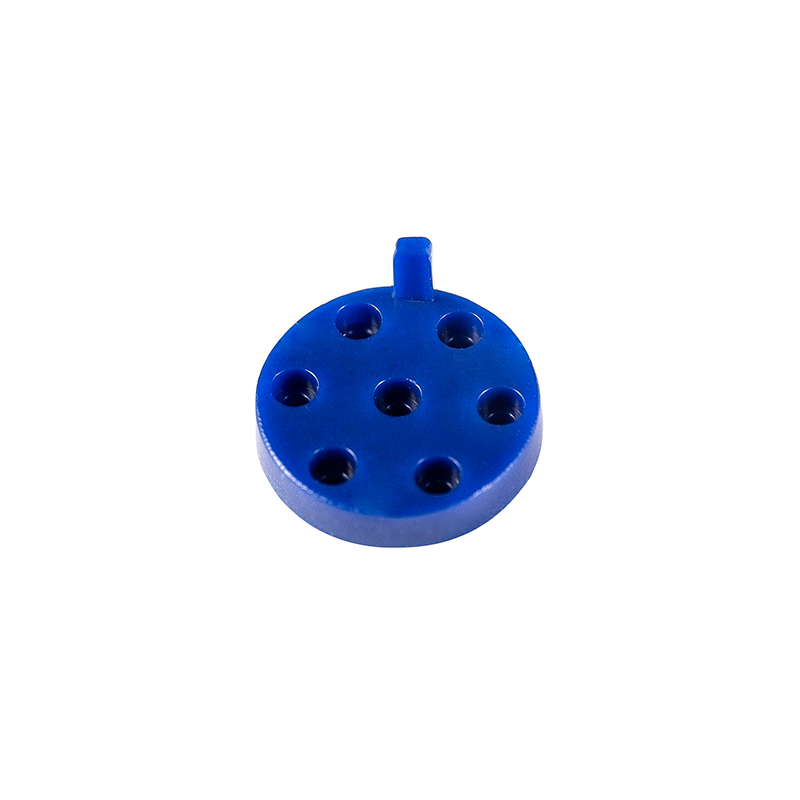
A headlamp leveling motor is a motion-control device. It tilts the beam up or down according to load or driving conditions, and because it lives inside a sealed housing exposed to heat and vibration, its plastic enclosure has to keep accurate mounting positions and uniform wall thickness for years. Reinforcement geometry and the ejector rod matter just as much: if the shell deforms under motor load, beam alignment drifts.
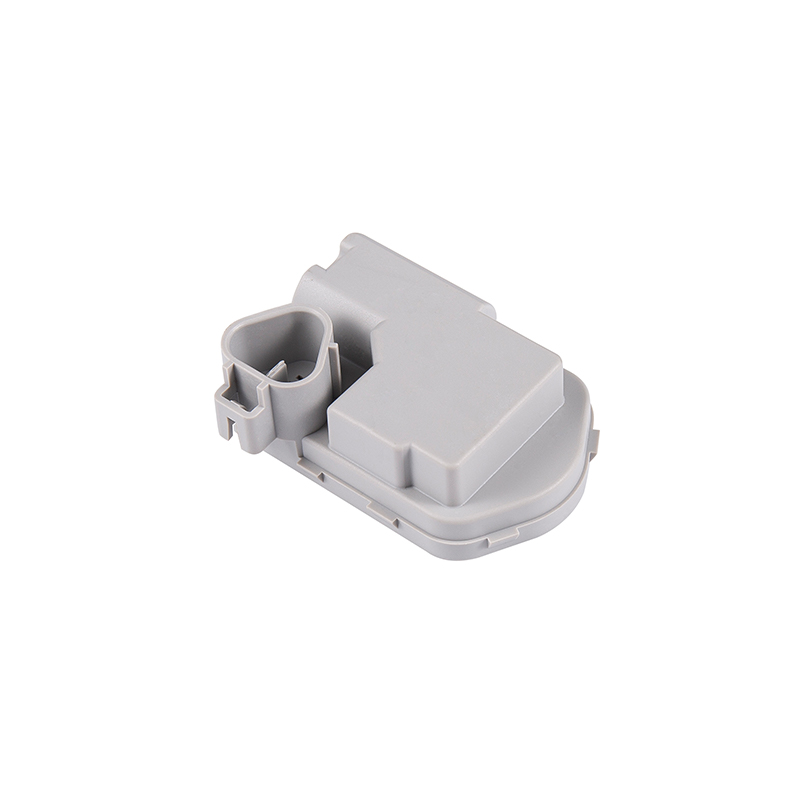 T2 Upper Shell for Automotive Headlamp Leveling MotorPrecision-molded PA66+30%GF housing for dimming motor assemblies, with integrated sockets and pins; useful where precise mounting geometry supports stable beam alignment.View Product →
Parts of this size almost always ship with a first-article inspection report, or at minimum a dimensional report covering the critical mounting features. Those few tenths of a millimeter are what determine whether the beam lands within the allowed range in every assembled unit.
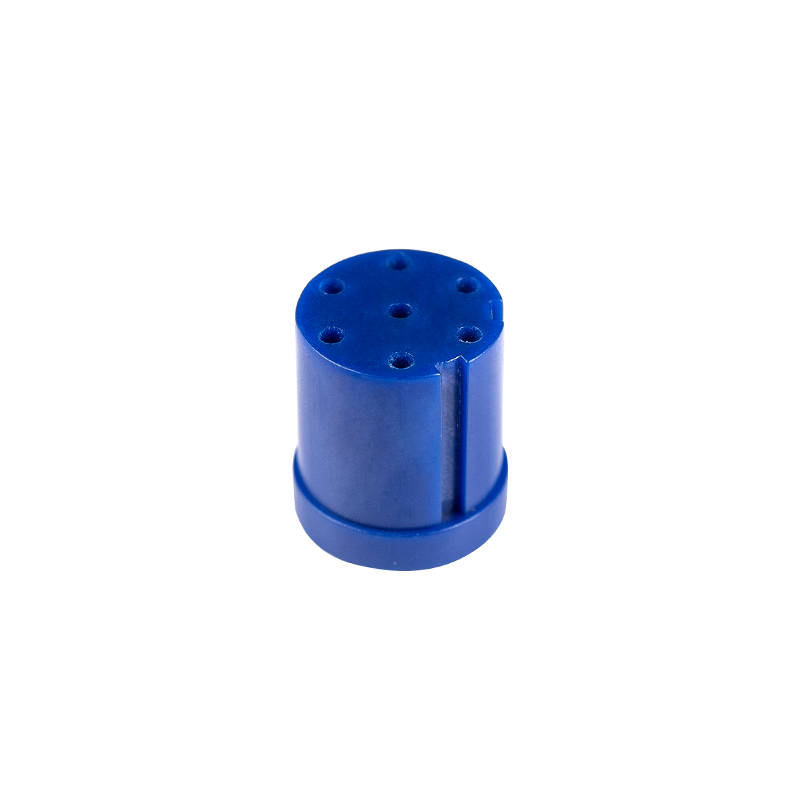
Power tailgate struts work under load for their entire service life, with inner and outer spring sleeves sliding against each other. Material selection here is not casual. Inner sleeves are usually molded from a polymer such as PA612, which absorbs less moisture and therefore holds its dimensions through humidity and temperature swings, while outer sleeves are typically PA66 or a glass-filled grade that carries the axial load.
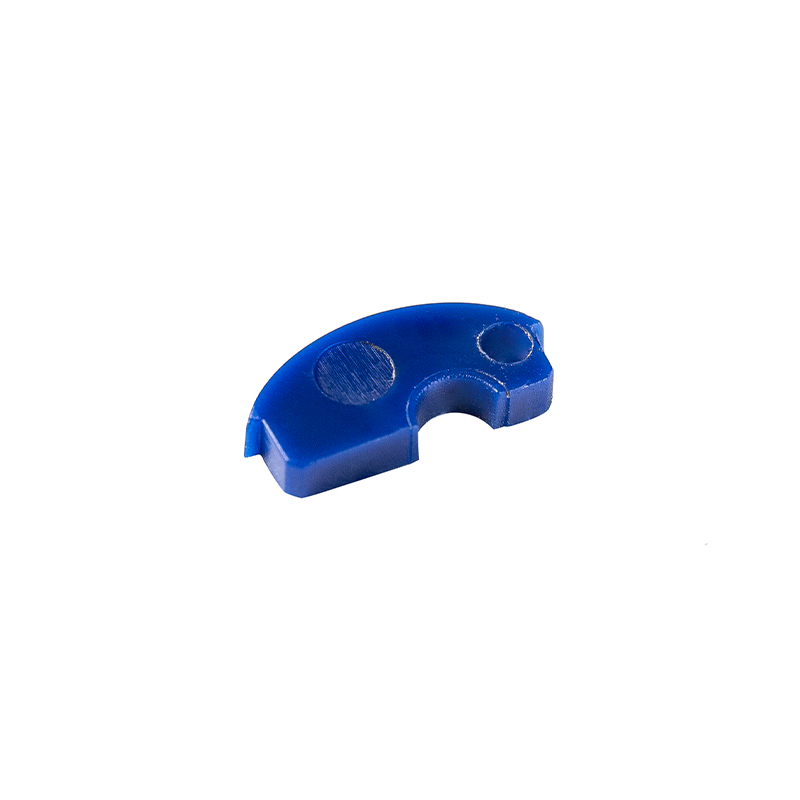
process analysis of strut bushing injection molding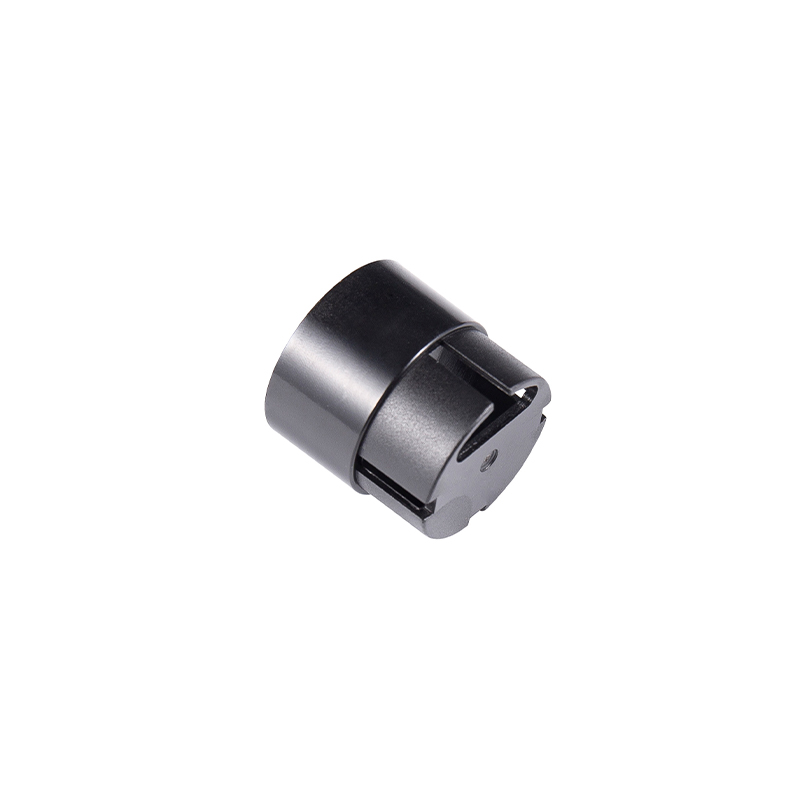 PA66 70G33L Bushing for Automotive Electric Strut SystemsInjection-molded PA66 70G33L bushing for electric strut assemblies, supporting precise fit, stable load, and quieter repeated operation.View Product →
These are small parts, often only a few grams each, but their roundness and wall thickness uniformity decide whether a strut operates quietly at the hundred-thousandth cycle or starts to whine.
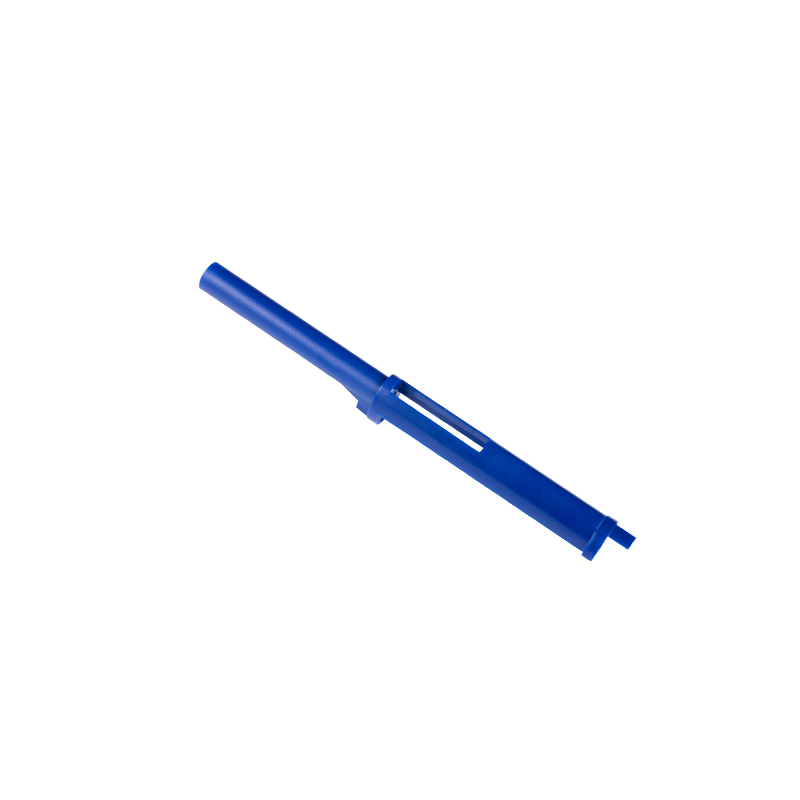
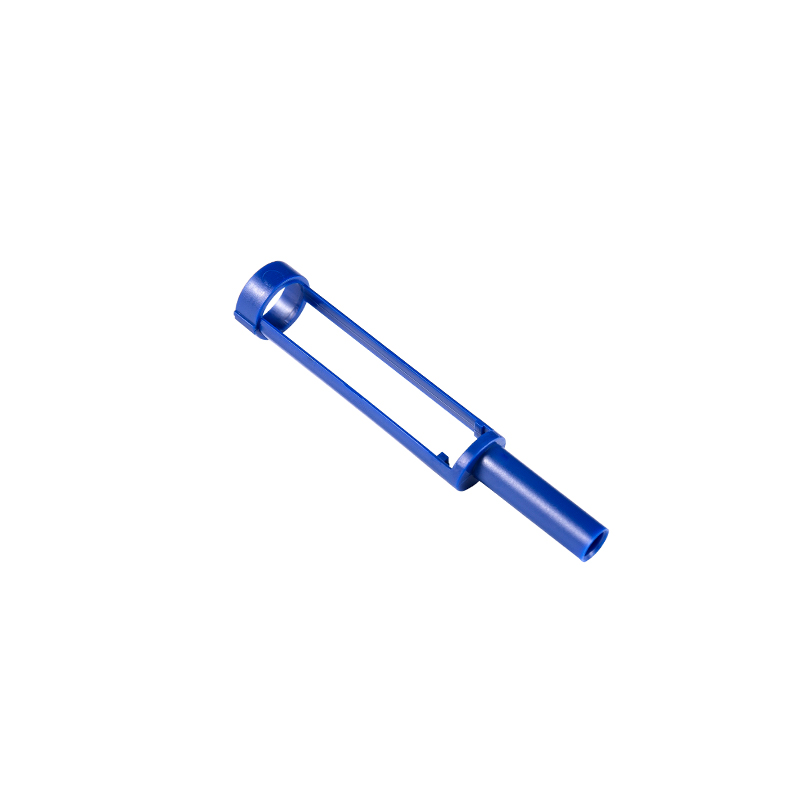
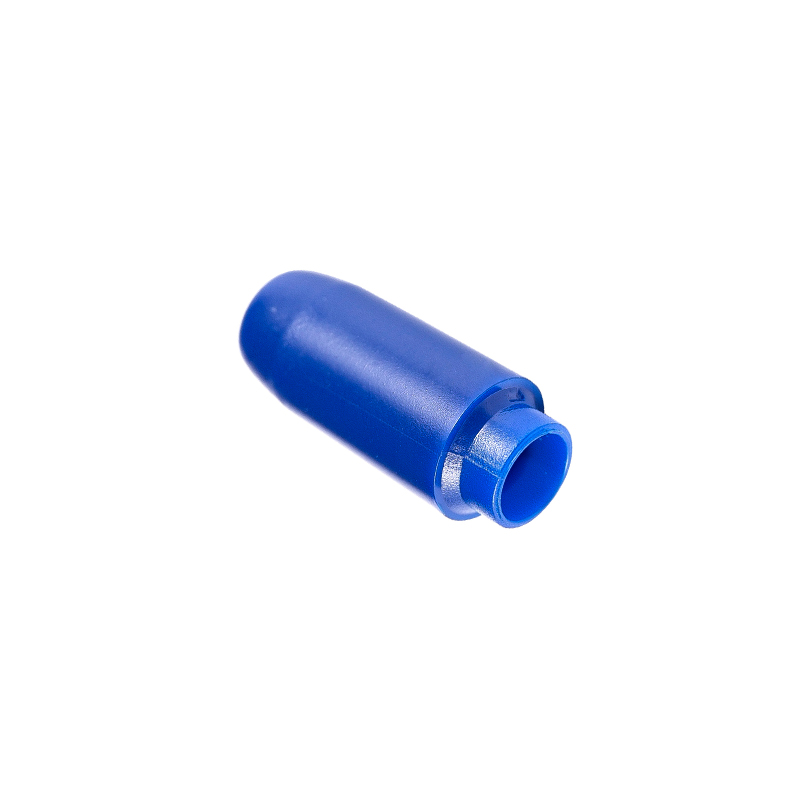
Not every automotive part ends up on a vehicle. Tire changers, wheel balancers and lifting equipment rely on plastic fasteners and protective inserts so that steel tool heads do not damage expensive rims. A 16 gram injection molded ball fastener is a good example of the category: small, tightly specified, and existing purely to take repeated load without marring the surface it contacts.
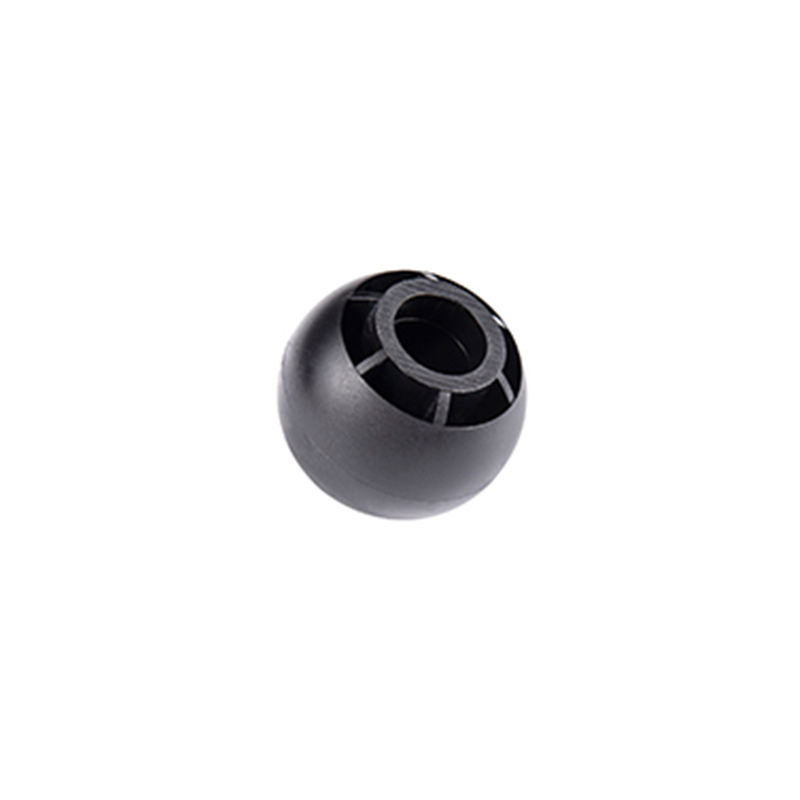 16g PA66 Ball Fastener for Automobile Repair EquipmentInjection-molded PA66 21SPC ball fastener, 16g, for repeated fastening in automotive and repair-shop equipment, with a spherical head for easier alignment.View Product →
These items are often bought in batches, so unit cost matters alongside performance. Still, the material cannot be guessed at, because a repair shop is a harsher environment than a passenger car ever sees.
Material selection in automotive work is rarely about one property. It is a negotiation between stiffness, impact behavior, heat resistance, moisture uptake, chemical exposure and cost per kilogram. The table below summarizes the polymers we work with most often and the reasoning behind each choice.
| Material | Typical automotive use | Why it is chosen |
|---|---|---|
| PA66-GF30 | Strut outer sleeves, structural bushings | High rigidity and heat resistance under sustained load |
| PA612 | Strut spring inner sleeves | Low moisture absorption keeps dimensions stable over time |
| PA66 (unfilled) | Wear pads, sliding bushings | Toughness and abrasion resistance without brittleness |
| POM | Precision fasteners, small gears | Low friction and excellent dimensional repeatability |
| PBT-GF20 | Adjustment and drive elements | Chemical resistance plus stable molding behavior |
| PC/ABS | Housings exposed to sunlight or heat | Impact strength with good surface finish |
| PA6 | General structural brackets | Balanced cost, toughness and processability |
Notice the pattern running through the table. Whenever a part has to keep a tight fit over years of moisture cycling, we lean toward a material with low water uptake. Whenever a part has to survive friction, we lean toward POM or an unfilled nylon. The decision is driven by the failure mode we want to avoid, not by a preference for one resin family.
Most quality problems in automotive molding are designed in long before the first shot. Gate location, cooling circuit layout, ejection strategy and shrinkage compensation set the ceiling on what the process can achieve. A mold that fills unevenly will produce parts that warp unevenly, no matter how the machine parameters are tuned afterward.
On the production side, the discipline is simpler to describe than to maintain: lock the process window, monitor it, and treat any drift as a signal rather than a nuisance. Periodic mold maintenance extends tool life far more cheaply than replacing a worn cavity insert.
Whether you are sourcing a single bracket or a family of related components, a few questions separate a smooth project from a difficult one.
None of these questions require a large supplier. They require a supplier who is willing to answer them in writing.
Plastic injection molding for automotive parts is a field where the visible component is never the whole story. The real work happens in the material specification, the mold design and the process discipline that keeps a few grams of polymer within tolerance for a decade. That is the part of the job we have focused on since 2002, and it is the part that still decides whether a program succeeds.
Copyright © Suzhou Huanxin Precision Molding Co., Ltd. All Rights Reserved.