
 English
 中文简体
中文简体 Home / News / Industry News / Automotive Plastic Injection Molding: Key Processes, Parts & Design Insights
Content
Injection molding has become the backbone of automotive plastic component manufacturing because it delivers unmatched repeatability, complex geometries, and large-scale cost efficiency. Modern passenger vehicles now contain over 30% plastic content by volume but only around 10% of total vehicle weight, a direct result of injection molded parts replacing metal in numerous systems.
The process directly supports lightweighting targets that aim to cut CO₂ emissions. By switching from metal to injection molded automotive parts for components like brackets, housings, and intake manifolds, engineers routinely achieve 25–40% weight reduction per part while maintaining structural integrity. Cycle times for medium-sized glass-fiber reinforced parts can be as short as 25–45 seconds, making output rates of several hundred thousand units per tool feasible annually.
Beyond lightweighting, plastic injection molding in the automotive industry consolidates assemblies. A single molded front-end carrier can replace 10–15 steel stampings and fasteners, cutting assembly time and inventory cost. The ability to over-mold soft seals or threaded inserts further eliminates secondary operations, so the technology is now embedded in everything from power-train to exterior trim.
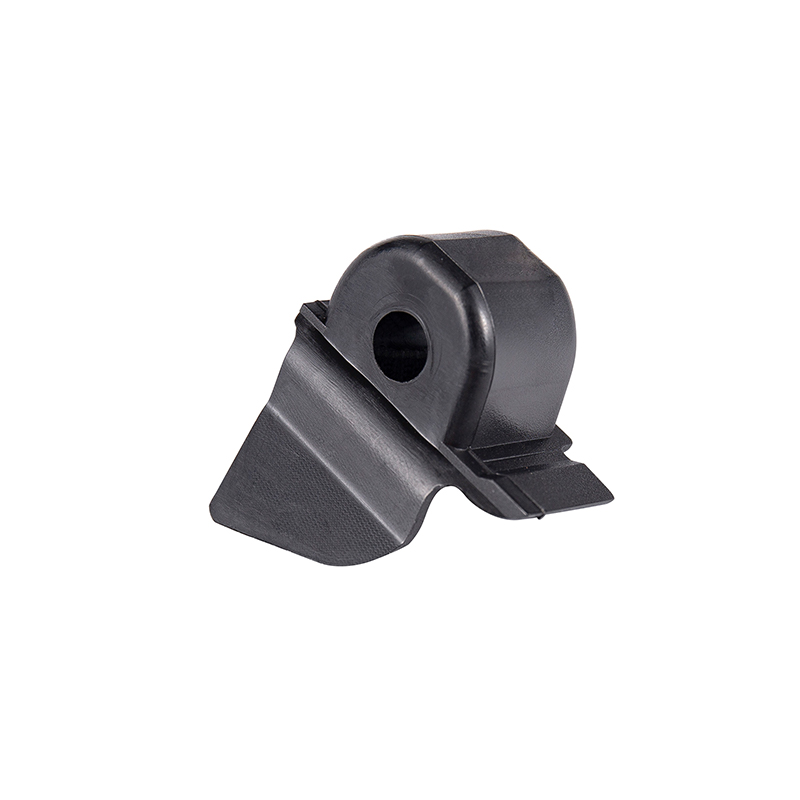
Material choice is the single largest lever affecting part performance, cost, and mold design. While polypropylene (PP) still accounts for nearly 50% of all automotive plastics by weight, demanding under-hood and structural applications increasingly rely on engineered thermoplastics. The table below summarizes the most common families and where they deliver the best value.
| Material Family | Typical Modulus (MPa) | Heat Deflection Temp (°C) | Common Automotive Application |
|---|---|---|---|
| PP-T20/30 (talc-filled) | 2,500–3,500 | 90–110 | Door panels, bumpers, HVAC housings |
| PA6/66 GF30 | 8,000–10,000 | 200–250 | Radiator tanks, engine covers, charge-air pipes |
| PBT/PET GF20-30 | 7,000–9,500 | 180–210 | Connectors, sensor housings, wiper systems |
| ABS/PC blends | 2,200–2,800 | 100–120 | Interior trims, center consoles, buttons |
Filled grades dominate because they balance stiffness and warpage. In plastic injection molding automotive parts that must survive 2,000-hour thermal cycling tests, glass-fiber reinforcement at 20–35% by weight is standard. For appearance-grade interior surfaces, unfilled or mineral-filled grades with low gloss and scratch resistance are preferred, and they often require specific mold surface texturing to meet OEM graining standards.
Some of the most cost-competitive injection molded automotive parts are those that have moved from multi-piece assemblies to single-shot designs. The business case is driven not only by raw material price but by eliminating welding, fasteners, and labor. Below are part categories where injection molding delivers consistently strong cost-to-performance ratios.
Across all these examples, successful injection molded automotive parts share a common trait: the initial tooling investment is amortized over large volumes. For programs exceeding 80,000 units per year, multi-cavity tools with hot-runner systems often bring the per-part cost below that of stamped steel equivalents, even before accounting for secondary savings.
Robust automotive plastic part design starts with toolability and extends to long-term performance under thermal and mechanical loads. Getting the details wrong at the design stage still accounts for an estimated 40–60% of all molding defects encountered during pre-production runs. The following rules address the most frequent correction loops.
Mold flow simulation is now a non-negotiable step in automotive plastic part design. It predicts knit line location, air traps, and warpage before steel is cut. In programs where simulation data drove the final gate and cooling layout, the number of tool modification iterations dropped by an average of 30%, according to a benchmarking study of 15 Tier-1 suppliers.
The role of injection molding in the automotive industry is expanding well beyond traditional interior and exterior trims. Electric vehicle architectures and new crash safety requirements are creating demand for parts that combine structural performance with electrical functionality in ways that metal cannot easily replicate.
One strong trend is the use of injection molded structural components in battery enclosures. Large-format polypropylene with flame-retardant additives or nylon-based composites can form the battery pack housing, reducing weight by approximately 30% versus aluminum while meeting fire containment standards. Over-molding conductive tracks onto these housings for cell monitoring is also moving from prototype to production at several European automakers.
Another shift is visible in exterior applications. Thermoplastic tailgates, currently used on high-volume C-segment SUVs, utilize injection molded inner panels bonded to a thermoplastic outer skin. This design saves up to 8 kg per vehicle and supports complex aerodynamic shaping and integrated lighting features. As multi-shot and insert molding technologies mature, more safety-critical parts like pedal brackets and seat back frames are transitioning to reinforced thermoplastics, backed by fatigue test data showing zero failure after 100,000 load cycles.
Copyright © Suzhou Huanxin Precision Molding Co., Ltd. All Rights Reserved.