
 English
 中文简体
中文简体 Home / News / Industry News / Medical Plastic Injection Molding: Materials, Standards, and Process Control
The dose button on an insulin injection pen is a molded plastic part roughly the size of a coin, yet it must survive thousands of actuation cycles, resist the medication it contacts, and hold dimensions tight enough that the internal gearing never slips. Parts like this, along with scalpel handles, endoscope connectors, and protective caps, are why medical plastic injection molding has become the default manufacturing route for plastic medical components. The short conclusion comes first: once production volumes justify the tooling, no other process delivers this combination of gram-level precision, validated repeatability, and per-part cost. Everything else in a medical molding program, from resin selection to cleanroom handling, exists to protect that consistency.
Content
Medical plastic injection molding is the process of melting a medical-grade thermoplastic, injecting it under high pressure into a machined steel mold, letting it cool into a finished shape, and ejecting it, usually within 10 to 60 seconds for small components. The mold itself, with its cavities, cooling channels, and ejection system, is the heart of the operation, and its build quality determines part dimensions, surface finish, and cycle stability for the entire life of the program.
What separates medical molding from general plastic molding is not the machine. It is the discipline around it. Material lots are certified and traceable. Process parameters are locked and documented so that part number 10,000 is dimensionally identical to part number 10, which is exactly what regulators expect when a device design is validated. Contamination is controlled through dedicated material handling and, for sensitive components, cleanroom production. Buyers should therefore evaluate medical molding as a documented system rather than a single machine capability, because the paperwork and the process control carry as much weight as the parts themselves.
Most plastic components in medical devices fall into a few recurring categories, and each category places a different demand on the mold and the material.
Minimally invasive instruments rely on molded housings that must combine ergonomic grip with structural reliability around metal working ends. Typical builds pair an ABS handle shell with steel-tube fixation inserts, or use PTFE-modified grades at the tail shell where low friction and chemical resistance matter. These are small, gram-level parts, so the margin for sink marks, flash, or dimensional drift is close to zero. Components such as a minimally invasive scalpel ABS handle injection molded shell show how housing geometry, insert fixation, and medical-grade material selection have to be resolved together rather than one at a time.
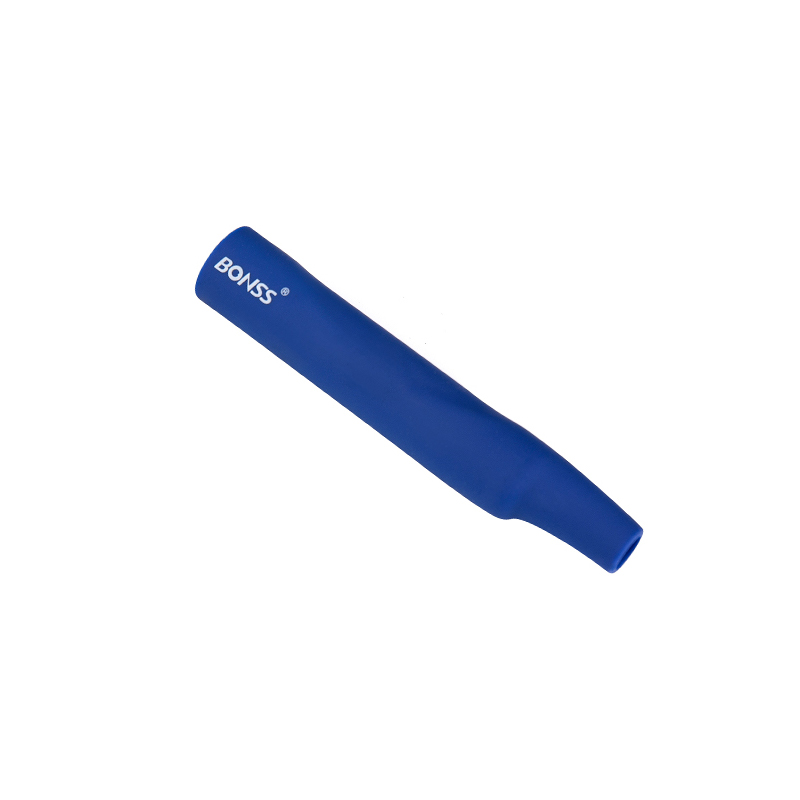 Minimally Invasive Scalpel ABS Handle Injection Molded ShellA lightweight ABS handle shell for minimally invasive scalpel instruments, pairing ergonomic grip with insert fixation around metal working ends, where small gram-level parts leave no tolerance for sink marks or flash.View Product →
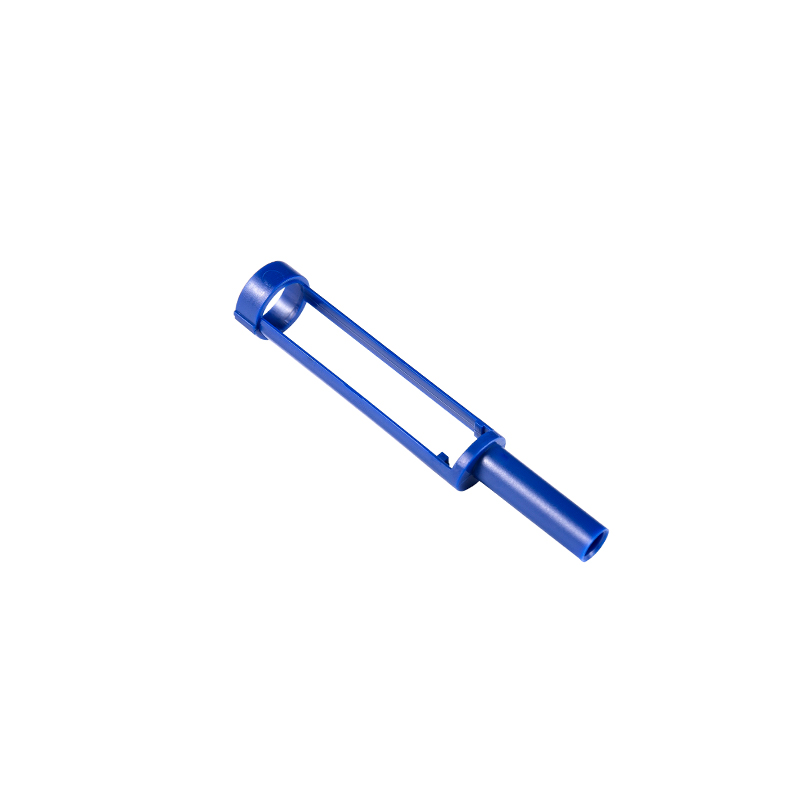
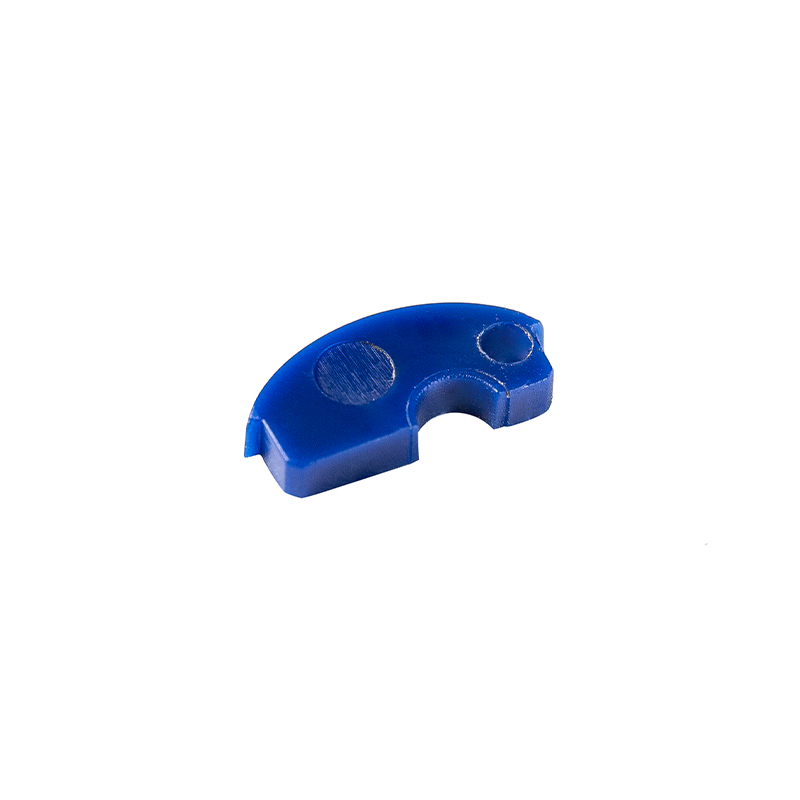
Dose buttons, push rods, drum gears, and cartridge holders inside injection pens are precision transmission parts. They see repeated mechanical loading, contact with medication, and in many cases repeated cleaning and disinfection, so suppliers commonly specify reinforced grades such as PA66-GF30 with 15% PTFE, PBT with 20% glass fiber, or POM. Each additive plays a specific role: glass fiber raises stiffness and limits creep, PTFE lowers friction in moving pairs, and POM holds dimensions in a chemically active environment. A PA66-GF30-15% PTFE injection pen push rod is a good illustration of how the material grade itself carries part of the design load.
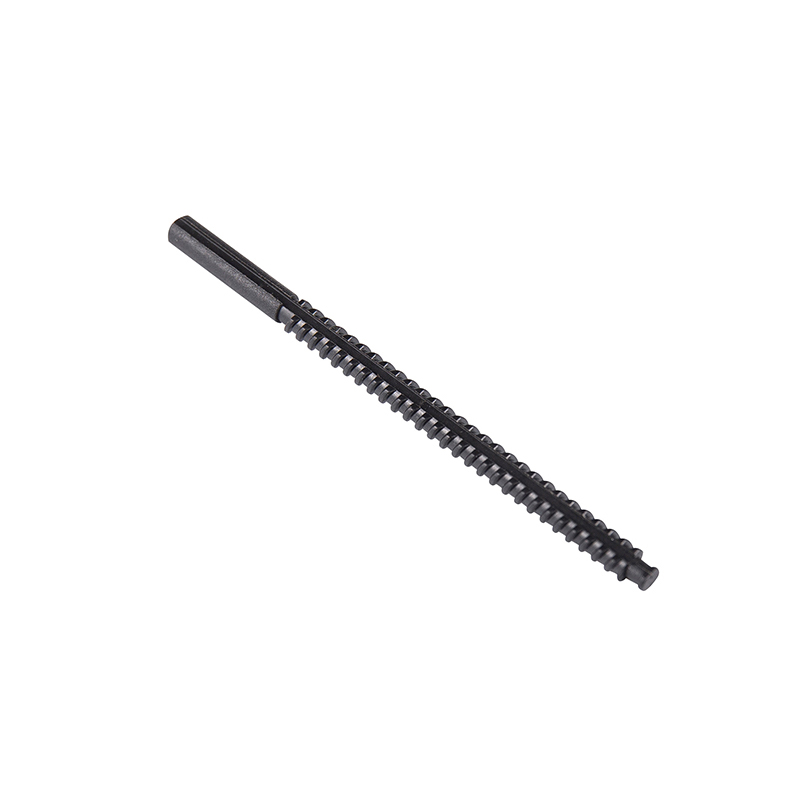 PA66-GF30 with 15% PTFE Injection Pen Push RodA precision push rod molded in PA66 with 30% glass fiber and 15% PTFE, combining stiffness, low creep, and low friction for injection pen dose mechanisms under repeated mechanical loading and disinfection.View Product →
Gastroscope connectors, lenses, and rotating discs are molded in transparent polycarbonate, where optical clarity is a functional requirement rather than a cosmetic preference. Transparent medical molding demands thorough resin drying to prevent streaks and bubbles, well-polished cavities, and careful control of melt temperature and injection speed so the part releases without stress marks. A gastroscope transparent PC injection connector, often weighing only one or two grams, is exactly the kind of part where this discipline becomes visible in the finished surface.
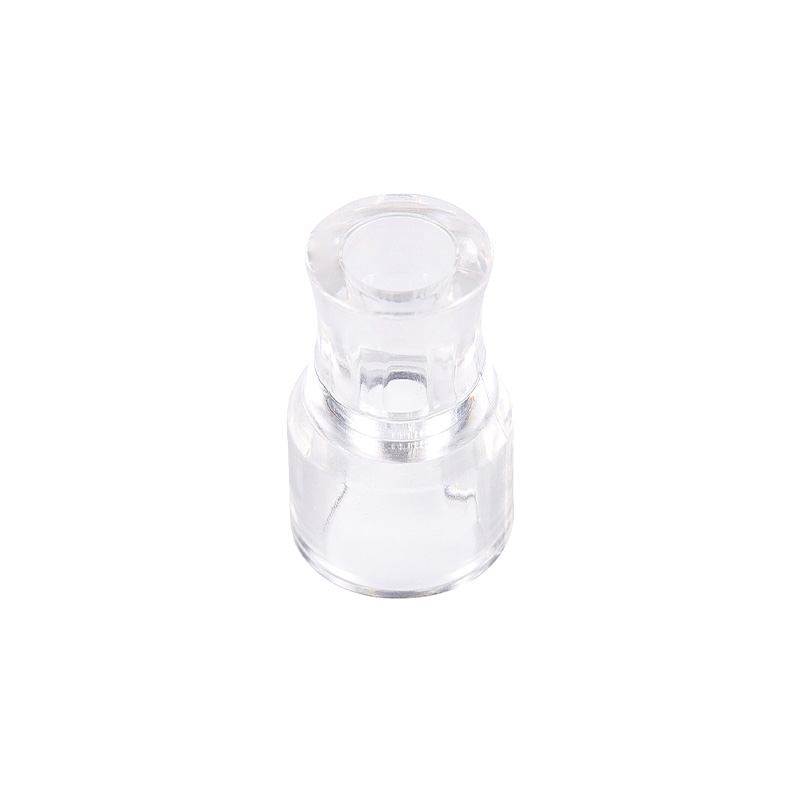 Medical Gastroscope Transparent PC Injection ConnectorA small transparent polycarbonate connector for gastroscope assemblies, where optical clarity, stress-free release, and tight dimensional control make careful resin drying and polished cavities visible in the finished surface.View Product →
Beyond these three groups, the same process produces equipment housings and hinge covers, lampshade assemblies and card reader brackets in ABS, PA12, and PP, sterile packaging components, and laboratory consumables. The unifying thread is volume: once a device program ships in quantity, injection molding is almost always the most economical way to make each plastic component consistent.
Material choice in medical molding answers three questions at once. First, can the resin contact the body or the drug, which points to biocompatibility assessment under ISO 10993 or USP Class VI certification. Second, can it survive the intended sterilization method, whether ethylene oxide, gamma or e-beam irradiation, or steam; gamma exposure can discolor some resins, and steam places limits on hydrolysis-prone grades. Third, does it perform mechanically in the actual use environment, including contact with disinfectants, lipids, and repeated loading. Glass fiber reinforcement raises stiffness and reduces creep, while PTFE modification lowers friction in moving parts, which is why modified engineering grades dominate precision transmission components.
| Material | Typical Medical Uses | Why It Is Chosen |
|---|---|---|
| PP and PE | Syringes, disposable connectors, packaging | Chemical resistance, low cost, compatible with EtO and gamma sterilization |
| PC | Endoscope connectors, lenses, transparent housings | Optical clarity combined with high impact strength |
| POM | Gears, release buttons, dose mechanisms | Dimensional stability, low friction, drug resistance |
| PA66-GF, PTFE modified | Push rods, drum gears, structural parts | Stiffness, wear resistance, creep control under load |
| PBT | Push rod drivers, electrical components | Chemical and sterilization resistance, stable dielectric behavior |
| ABS | Handles, shells, protective caps | Impact strength, good surface finish, cost efficiency |
| PEEK | Implantable and reusable surgical components | Biocompatibility, high temperature and chemical resistance |
Four frameworks shape most medical molding programs. ISO 13485 defines the quality management system for medical device manufacturing, covering documentation, training, traceability, and nonconformance handling, and it is the baseline many buyers screen for first. ISO 10993 governs biological evaluation of materials that contact the body directly or indirectly. In the United States, FDA quality system regulations under 21 CFR Part 820 run in parallel with ISO 13485. ISO 14644 classifies cleanrooms, with Class 7 or Class 8 environments commonly specified to limit particulate contamination during molding and assembly. On top of these sit process validation and sterilization validation, both of which depend on stable, documented molding parameters rather than one-off inspections.
For a practical view of how a molding supplier aligns with these expectations, this overview of how to ensure medical plastic injection molding accessories meet ISO requirements walks through the logic checkpoint by checkpoint.
The decisive factor in supplier selection is rarely machine count. It is whether the supplier controls the whole chain that feeds the machine: mold design and build, material handling, and process monitoring. One manufacturer that illustrates this integrated model is Suzhou Huanxin Precision Molding Co., Ltd., which builds its precision injection molds in-house and supplies gram-scale molded accessories for medical devices, injection pens, and endoscopic applications alongside automotive and electrical components. Whether you evaluate that supplier or another, the checklist below applies.
One final recommendation: bring the molder into the conversation at the part design stage rather than after the drawing is frozen. Wall thickness, draft angles, gate location, and material grade interact in ways that are cheap to adjust on a CAD model and expensive to fix in steel.
Copyright © Suzhou Huanxin Precision Molding Co., Ltd. All Rights Reserved.