
 English
 中文简体
中文简体 Home / News / Industry News / Plastic Injection Moulding Services in China: Quality, Risk & Mold Care
Content
China accounts for roughly 35% of global plastic injection moulding output, and the supply base ranges from small single-press workshops to vertically integrated factories running hundreds of machines. The depth of that range means supplier selection determines the outcome more than almost any other factor in the procurement process.
When evaluating plastic injection moulding services in China, the following criteria separate capable partners from low-cost risks:
Requesting a factory audit report from a third-party inspection firm before placing a tooling deposit is standard practice for first-time engagements and adds meaningful due diligence at a cost of roughly USD 300–600.
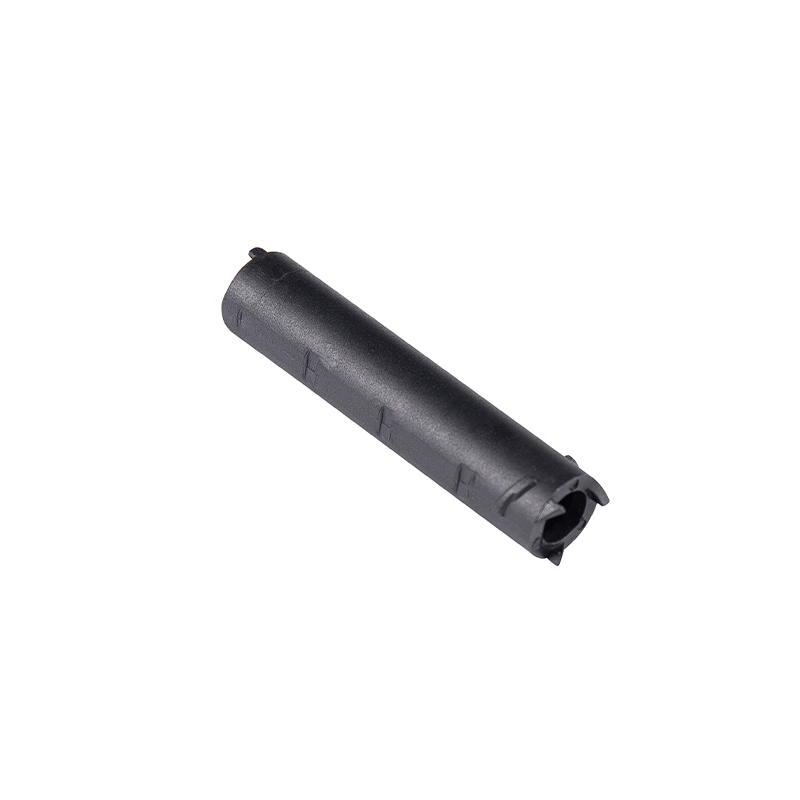
Effective injection moulding quality control is structured in layers — each stage catches defect categories that the next stage cannot reliably detect. Relying on final inspection alone routinely misses root causes, drives up rework costs, and delays shipment.
Before production begins, a full dimensional report against the engineering drawing should be generated from the first shots off the qualified tool. FAI verifies that the mold produces parts within tolerance and surfaces that meet finish specifications. Any deviations are corrected before the production run is approved, eliminating the risk of producing thousands of non-conforming parts.
During production, critical dimensions should be monitored using control charts at defined sample intervals. SPC signals when a process is drifting — often due to mold wear, resin lot variation, or press parameter shift — before defects become visible to the naked eye. For high-volume runs, a Cpk value of ≥1.33 on critical features is a widely accepted benchmark for process capability.
A pre-shipment inspection (PSI) carried out when at least 80% of goods are packed combines visual inspection, dimensional spot-checks, and functional testing against an agreed AQL (Acceptable Quality Level). AQL 1.0 for critical defects and AQL 2.5 for major defects is a reasonable starting point for consumer-facing plastic components.
| Defect Type | Typical Root Cause | Detection Stage |
|---|---|---|
| Sink marks | Insufficient packing pressure or wall thickness variation | FAI / PSI visual |
| Warpage | Uneven cooling, gate imbalance, or improper ejection | FAI dimensional / SPC |
| Flash | Worn parting line, excessive injection pressure | In-process operator check |
| Short shots | Insufficient material, blocked gate, or venting failure | In-process operator check |
| Dimensional drift | Mold wear or resin lot variation | SPC trending |
Risk management in plastic injection molding is most effective when it is front-loaded — decisions made during the design and tooling phase carry consequences that are extremely expensive to reverse once production is running. Industry data consistently shows that over 70% of manufacturing defect costs are locked in at the design stage, making early-stage risk review the highest-leverage activity.
Parts designed without moldability in mind — insufficient draft angles, inconsistent wall thickness, or undercuts that require complex side-actions — inflate tooling cost and increase the probability of chronic defects. A formal DFM review before tool steel is cut typically costs nothing when done with the molder and eliminates the most common and expensive redesign loops.
Substituting a specified resin grade — even within the same polymer family — can alter shrink rate, impact resistance, or chemical compatibility in ways that invalidate prior qualification testing. Material change controls should be written into the supplier quality agreement, requiring documented approval before any substitution, including equivalent-grade changes from the same resin manufacturer.
Mold ownership disputes are a persistent risk when tooling is paid for by the buyer but physically held at the supplier's facility in China. Contracts should explicitly state tool ownership, right of removal, and the conditions under which the buyer can transfer the mold to an alternative factory. Maintaining a duplicate cavity or a second qualified supplier for critical components reduces exposure to unplanned capacity disruptions.
Unannounced press changes, operator substitutions, or process parameter adjustments made without notification are a common source of quality escapes in offshore manufacturing. A robust supplier quality agreement should mandate prior written notification for any change that affects part form, fit, or function — a requirement known in automotive supply chains as the PPAP change control process.
A production injection mold represents an investment typically ranging from USD 5,000 for a simple single-cavity tool to USD 100,000 or more for a complex multi-cavity family mold. Without structured preventive maintenance, tool life is shortened by corrosion, wear, and mechanical fatigue — and unplanned mold repairs carry both direct costs and production downtime.
The following plastic injection mold maintenance checklist covers the key actions at each service interval:
Documenting every maintenance action with date, shot count, and technician sign-off transforms the maintenance log into an early-warning system — patterns in repair frequency reliably predict when a tool is approaching end of economic life before a catastrophic failure forces the issue.
Copyright © Suzhou Huanxin Precision Molding Co., Ltd. All Rights Reserved.